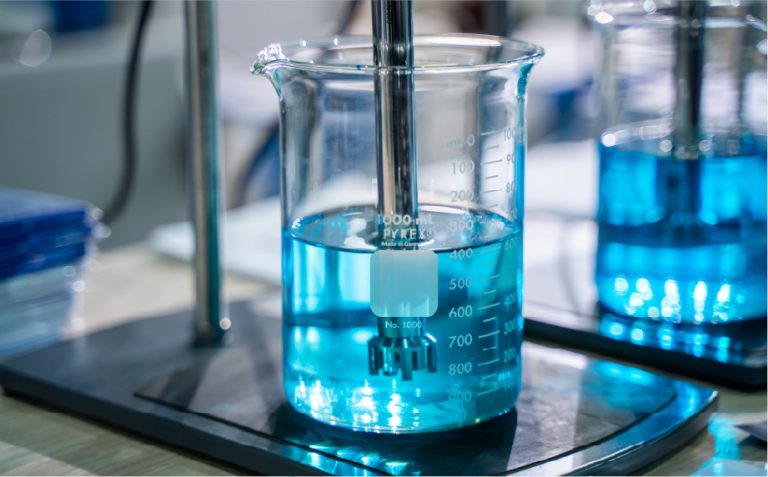
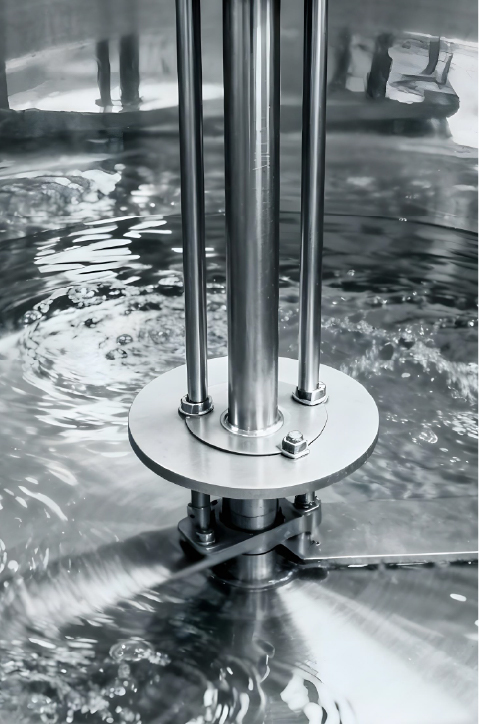
Manufacturing of Pharmaceutical Creams & Ointments

Quam quidem partem accusationis admiratus sum et moleste tuli potissimum esse Atratino datam.

introduce

Manufacturing of Pharmaceutical Creams & Ointments

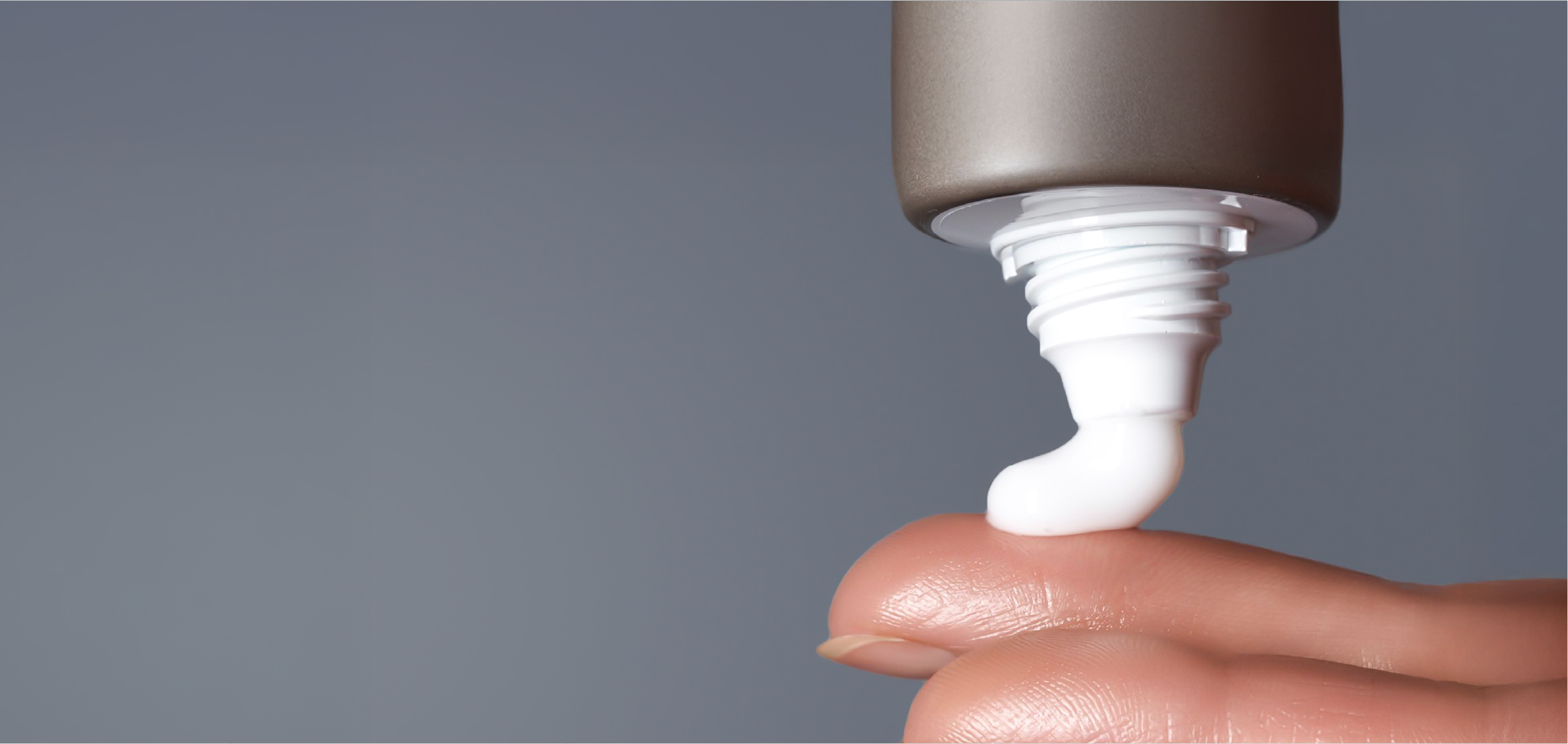
In the pharmaceutical industry, semi-solid preparations such as pharmaceutical creams and ointments serve as critical delivery vehicles for active ingredients. Their primary purpose is to transport medicinal agents—designed to treat conditions like rashes, infections, or inflammation—directly to the affected area. Whether formulated as Water-in-Oil (W/O) or Oil-in-Water (O/W) emulsions, these products consist of complex phases involving waxes, emollients, and thickeners, all working together to protect the potency of the ointment formula.

Explore Products

Ointment Formulation

Active ingredients are carefully balanced with excipients, stabilizers, and preservatives to create a formula that is effective, safe, and user-friendly.

The Science of Oinment Formula

The efficacy of a medicinal ointment is fundamentally rooted in its ointment formula. This complex architecture requires a precise equilibrium between Active Pharmaceutical Ingredients (APIs) and a diverse array of excipients designed to ensure safety, stability, and optimal skin absorption.

Below is a technical overview of the critical components that constitute an ointment formula::

Component

Function

Common Ingredients

Thickeners

Viscosity modification and structure

Waxy/Fatty Alcohol Combinations

Solvents

Solubilization of raw materials

Propylene Glycol, Diethylene Glycol

Emulsifiers

Interfacial stabilization of phases

Sorbitan Sesquioleate (Span 83)

Emollients

Dermal softening and hydration

Lanolin, Petrolatum, Paraffin

Active Ingredient

Pharmacological therapeutic effect

Bacitracin, Polymyxin B, Neomycin

pH Adjusters

Chemical stability maintenance

Lactic Acid, Sodium Hydroxide

Preservatives

Inhibition of microbial proliferation

Parabens, Sodium Benzoate

Humectants

Transepidermal moisture retention

Glycerin, Sorbitol

Antioxidants

Prevention of oxidative degradation

Tocopherol (Vitamin E), BHT

Coloring Agents

Visual identification and aesthetics

FD&C Dyes, Natural Pigments

Fragrance Agents

Olfactory enhancement

Essential Oils, Synthetic Aromatics

Download Printable Version
Process

Production Process

Hac ita persuasione reducti intra moenia bellatores obseratis undique portarum aditibus, propugnaculis insistebant

Precision Weighing
The process begins with strict dispensing of raw materials to guarantee batch consistency.
Phase Preparation
In separate mixing vessels, the oil phase is prepared by dispersing liquid into mineral or silicone oils, while the aqueous phase undergoes hydration within a specialized mixing tank where emulsifiers and stabilizers are dissolved in water.
Emulsification and API Integration
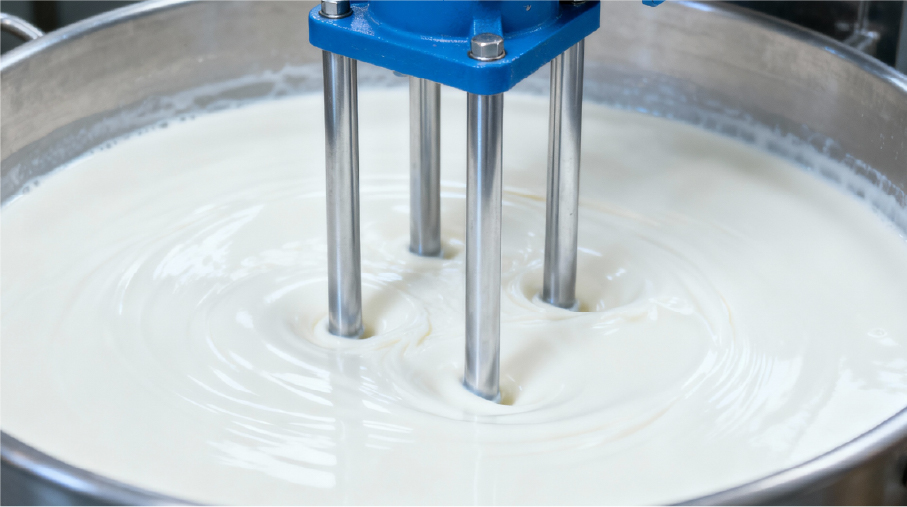
Once both phases are ready, they are combined under high-energy agitation. It is at this critical juncture that the API and excipients are introduced into the base, requiring perfect integration facilitated by an advanced emulsification mixer to bind the medicinal components with the emulsion structure.
Advanced Homogenization
This is the core of pharmaceutical production. Utilizing a high-performance industrial mixer, the droplets are refined to a microscopic scale. This step ensures that the API—which often makes up only a tiny fraction of the total volume—is distributed with absolute uniformity to prevent separation and guarantee the correct dosage in every application.
Controlled Cooling
The mixture must undergo a strictly monitored cooling phase. Using a robust machinery mixer with precise temperature management is essential to prevent unwanted crystallization, which can compromise the product’s texture, skin feel, and stability.
Problem

Problems with Using Traditional Mixers

  • A persistent issue involves the formation of stubborn agglomerates, particularly when thickeners develop "fish-eyes" in the aqueous phase.
  • Standard agitators often lack the necessary shear energy to penetrate clusters that are hydrated externally but dry at the core.
  • Similarly, oil phase components frequently form dense lumps during the blending of a complex ointment formula.
  • Without sufficient mechanical force, these clusters remain intact, leading to an uneven or grainy texture in the final preparation.
  • Incomplete hydration often causes raw materials to adhere to the mixing tank walls, resulting in significant material loss.
  • Achieving long-term stability requires reducing droplets to a microscopic scale, a task that a standard industrial mixer struggles to perform.
  • Using an inefficient machinery mixer extends processing times, as it fails to disperse thermally sensitive actives rapidly during the cooling stage.
  • Ultimately, an inadequate emulsification mixer can create inconsistent drug concentrations, posing risks to batch repeatability and regulatory compliance.
Solution

Crewin Solution

The production of pharmaceutical ointments is a complex procedure that necessitates high precision to ensure the stability and efficacy of the final product. By utilizing advanced high-shear mixing technology, manufacturers can overcome the limitations of traditional stirring methods to produce superior emulsions.

The following five stages outline the comprehensive manufacturing process:

  • Particle Size Reduction and Emulsification

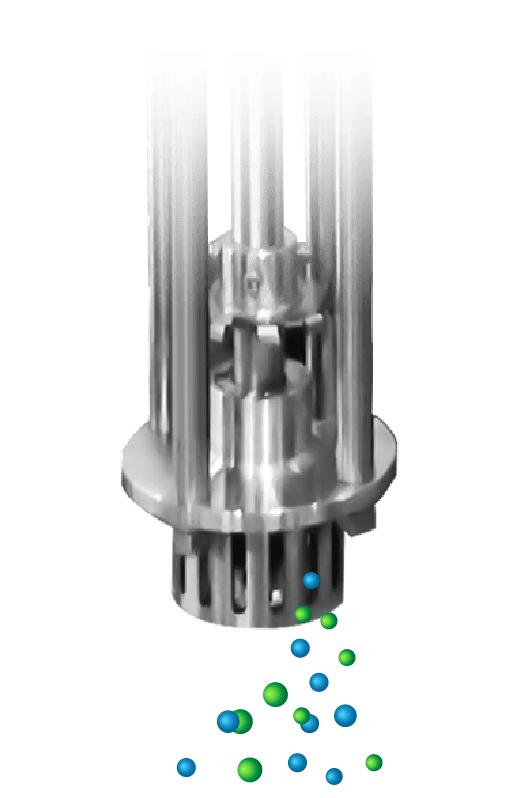
    Inside the workhead, centrifugal force drives the mixture toward the stator. The materials are subjected to intense hydraulic shear within the precision-machined gap between the rotor blades and the stator wall. This action effectively breaks down agglomerates and reduces the particle size of the ingredients, which is critical for achieving a smooth and non-gritty texture.

  • Continuous Recirculation for Homogeneity

    The mixture is expelled through the stator and circulated back into the main body of the vessel. This continuous cycle ensures that the entire batch passes through the high-shear workhead multiple times. The result is a highly stable and homogeneous emulsion where the active pharmaceutical ingredients (APIs) are uniformly distributed throughout the base.

  • Accurate Weighing of Raw Materials

    The formulation is divided into two distinct phases: the oil phase (waxes and oils) and the aqueous phase (water and hydrophilic solvents). Each phase is heated in separate jacketed vessels to ensure complete dissolution. Maintaining specific temperature ranges is essential to prevent the degradation of heat-sensitive active ingredients.

  • Controlled Cooling and Final Packaging

    The final stage involves a gradual cooling process to transition the ointment into its semi-solid state. Controlled cooling is vital to avoid the formation of crystals that could compromise consistency. Finally, the product undergoes rigorous quality testing for viscosity and microbial purity before being transferred to automated filling lines for packaging.

  • High-Shear Mixing of Combined Phases

    Once the phases are combined, a high-shear rotor-stator mixer is employed. The high-speed rotation of the rotor creates a powerful vacuum, drawing the liquids and undissolved solids upward from the base of the vessel into the workhead. This mechanical suction ensures that all ingredients are immediately incorporated into the mixing zone, preventing material loss.

Equipment Infrastructure for Ointment Manufacturing

  • Water Phase Mixing Vessel is the starting point, specifically engineered for the high-speed blending and heating of all water-soluble ingredients.
  • Wax Phase Mixing Vessel dedicated vessel provides the controlled thermal environment necessary for melting and preparing complex oil-soluble components and waxes.
  • Manufacturing Mixing Vessel serves as the central hub of the ointment formula production, where primary mixing and phase integration occur.
  • Homogenizer is utilized to reduce particle sizes, ensuring a perfectly uniform and silky product texture.
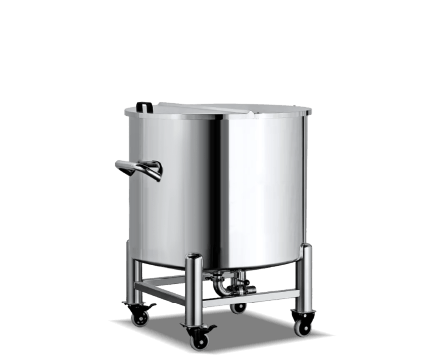
  • Storage Vessel securely hold the finished bulk product, maintaining its integrity before it moves to the final packaging stage.
  • Transfer and Metering Pumps move viscous materials through the industrial mixer system with high efficiency and accurate flow control.
  • Colloid Mill can be integrated to further refine particle dimensions, resulting in a smoother consistency for high-end medical applications.
  • Vacuum System is vital for eliminating micro-bubbles, which ensures a dense product and prevents oxidation within the mixing tank.
  • Heating and Cooling Systems manage temperature transitions, which are critical for optimal ingredient bonding and stable solidification.
  • Control Panel and Automation Software allows the machinery mixer to operate with repeatable precision and minimal human error.
  • Filling Capping Packing Line is ready for final distribution stage by executing high-speed capping, professional labeling, and secure wrapping.
  • Cleaning-in-Place (CIP) Systems guarantee pharmaceutical-grade hygiene by automating the sanitization of all internal equipment surfaces between batches.

Strategic Advantages

  • Our systems produce a remarkably stable emulsion that maintains consistency and integrity over an extended shelf life.
  • The high-energy workhead ensures a smooth, refined mix by completely disintegrating stubborn powder clusters and ensuring uniformity.
  • Manufacturers achieve a significantly optimized mixing cycle compared to conventional agitators within the mixing tank.
  • Raw material yield is maximized because thickening agents reach full hydration and active ingredients are thoroughly dispersed.
  • The advanced design removes the necessity for in-tank baffles, which promotes superior vessel hygiene and easier sanitization.
  • This industrial mixer technology streamlines the process by removing the need for labor-intensive pre-mixing of dry ingredients.
  • The aqueous phase can be processed at ambient temperatures, which minimizes energy consumption and accelerates the final cooling phase.
  • Every batch maintains exceptional quality and repeatability, ensuring the machinery mixer delivers high-performance results for every run.
Products

Ointment Making Mixer

Torque, speed, voltage, power, etc. Haec subinde Constantius audiens et quaedam referente Thalassio doctus, quem eum

View All Products

cases

See Ointment Making Mixer in Action

View All Cases
Get in touch

Looking for A Comprehensive Solution of Mixers?

Send us a message if you have any questions or request a quote. Our experts will give you a reply within 24 hours and help you select the right machine you want.

24/7 Support

Our experts will give you a reply within 24 hours

    Your Information How can we help?