Lab Mixers Overview
What is Lab Mixer?
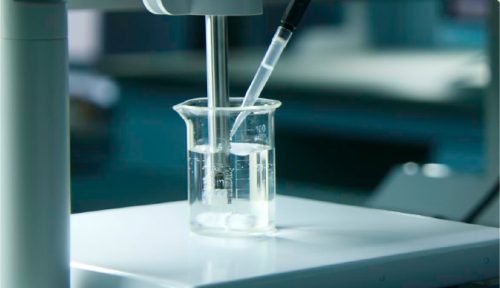
A lab mixer is a small-scale mixing machine widely used in laboratories for mixing, dissolving, dispersing, and emulsifying different materials. These machines are commonly used for product research, formula testing, and sample preparation before large-scale production.
Although laboratory mixers are smaller than industrial production equipment, their working principle is similar to full-size production mixers. This allows manufacturers to test product formulas and production processes before moving to larger manufacturing systems.
Lab mixers are widely used in the cosmetics, pharmaceutical, food, chemical, and new material industries for product development and pilot testing.
Common Types of Laboratory Mixers
Different laboratory applications require different mixing methods. Common laboratory mixers include vacuum homogenizer mixers, vacuum emulsifying mixers, batch homogenizers.
Lab vacuum homogenizer mixers are suitable for emulsifying cream, lotion, gel, and other semi-viscous products under vacuum conditions. Vacuum emulsifying mixers are often used for cosmetic and pharmaceutical research applications that require stable mixing and fine emulsification.
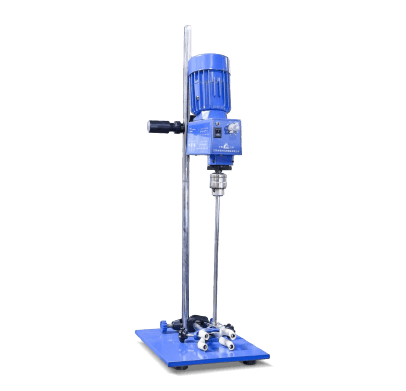
Batch homogenizers are commonly used for liquid mixing, dispersing, and small-batch testing. Many models are equipped with liftable stands for easier operation and movement inside the laboratory.
How Lab Mixer Works
Different Types of Laboratory Mixers
Laboratory mixers are designed for different testing and product development applications. Depending on the material and process requirement, laboratories can use vacuum homogenizer mixers, batch homogenizers, for small-scale production and formula testing.
Lab vacuum homogenizer mixers provide a complete vacuum mixing system for laboratory use. These machines are suitable for cream, lotion, gel, and emulsified products that require vacuum mixing and homogenizing functions during testing.
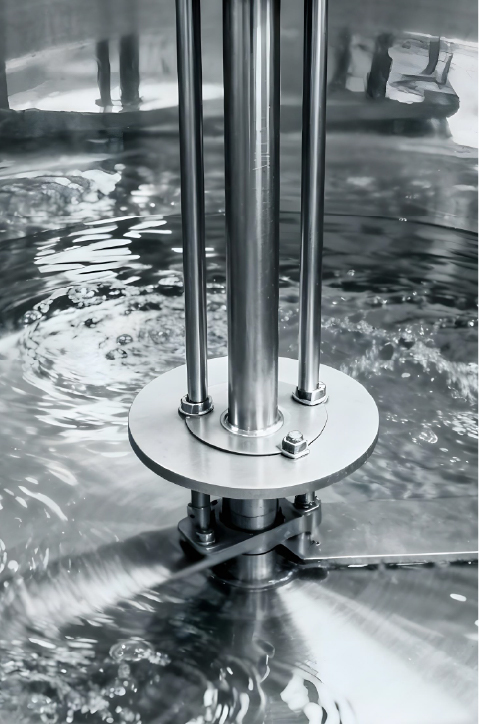
Batch lab homogenizers are high shear mixers mainly composed of a rotor and stator system with a movable stand. The mixing vessel is placed below the homogenizer head and lifted by a pneumatic or hydraulic system. During operation, the rotor rotates at high speed and creates strong shear force inside the mixing area.
Working Principle of Lab Mixers
In a lab vacuum homogenizer mixer, the materials are mixed under vacuum conditions while the homogenizer reduces particle size and improves product uniformity. The vacuum environment also helps reduce air bubbles during the mixing process.
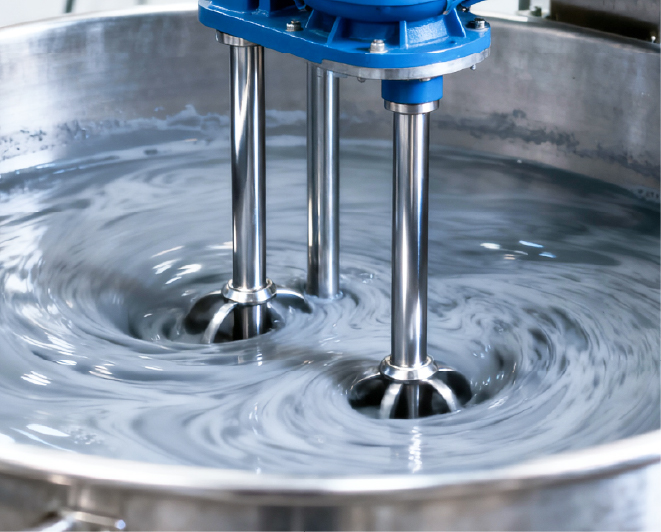
The batch lab homogenizer works through a high-speed rotor-stator system. When the rotor rotates, the material is drawn into the mixing head and subjected to strong mechanical shear force. This process allows the materials to be dispersed, emulsified, and homogenized more evenly.
After repeated mixing cycles, the materials inside the vessel become more evenly blended. Laboratory mixers are widely used for product research, sample preparation, and pilot batch testing before large-scale production.
The Quality Control of Lab Mixers
Lab mixers are designed in accordance with Current Good Manufacturing Practice (CGMP) regulations, which are widely applied in pharmaceutical, cosmetic, and food manufacturing industries. CGMP guidelines focus on proper design, process control, and monitoring of production systems to ensure consistent manufacturing performance.
Compliance with CGMP standards helps maintain stable product quality by ensuring controlled production procedures and structured operational management. It also supports the implementation of quality management systems that define clear operating procedures for each stage of production.
In addition, CGMP requirements include the management of process variations and product quality monitoring. This allows manufacturers to identify and review deviations during production and maintain consistent output quality.
Through compliance with CGMP standards, vacuum mixing equipment can support reliable and controlled manufacturing processes suitable for regulated industrial applications.
Applications of Emulsifying and Mixing Equipment
Modern emulsifying and mixing systems are widely used across pharmaceutical, food, cosmetic, and chemical industries for processing liquid, semi-solid, and high-viscosity products. These systems are designed to improve mixing consistency, product stability, and production efficiency in various manufacturing environments.
Pharmaceutical Industry
Pharmaceutical processing often requires precise handling of suspensions, syrups, creams, ointments, and sterile formulations. Emulsifying equipment helps achieve uniform particle distribution, stable product consistency, and controlled processing conditions for products such as pharmaceutical syrups, ophthalmic solutions, vaccines, and tablet coating materials.
Food and Beverage Industry
Food manufacturing processes involve blending ingredients with different viscosities while maintaining hygiene and product quality. Emulsifying systems are commonly used for dairy products, sauces, edible oils, flavor emulsions, confectionery products, pet food, and beverage processing applications.
Cosmetics and Personal Care Industry
Cosmetic manufacturing requires stable emulsification, effective powder dispersion, and uniform mixing of oils, fragrances, pigments, and thickening agents. Emulsifying homogenizers are widely used for creams, lotions, shampoos, conditioners, toothpaste, sunscreens, perfumes, and other personal care products.
Chemical Industry
Chemical processing applications often require efficient dispersion and homogenization of solid and liquid materials. Emulsifying equipment is suitable for paints, coatings, lubricants, agrochemicals, pigments, inks, specialty chemicals, and other industrial formulations.
CYJX provides emulsifying and mixing solutions designed to support different processing requirements across multiple industries, with customizable configurations available for various production capacities and product characteristics.

 ZS Lab Vacuum Emulsifying Mixer