Liquid Mixing Tank

Products

Liquid Mixing Tank

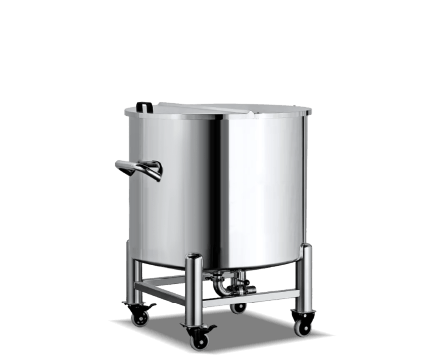
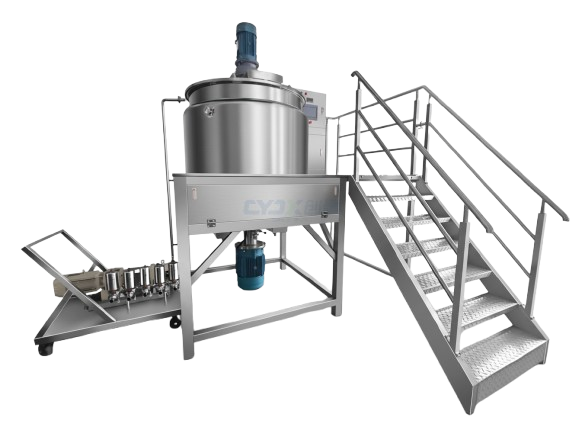
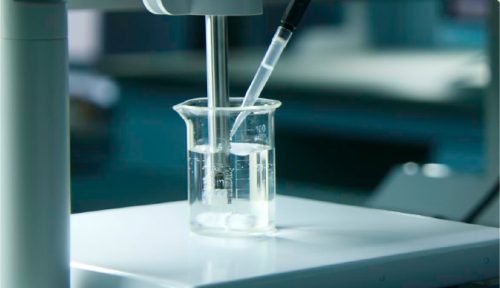
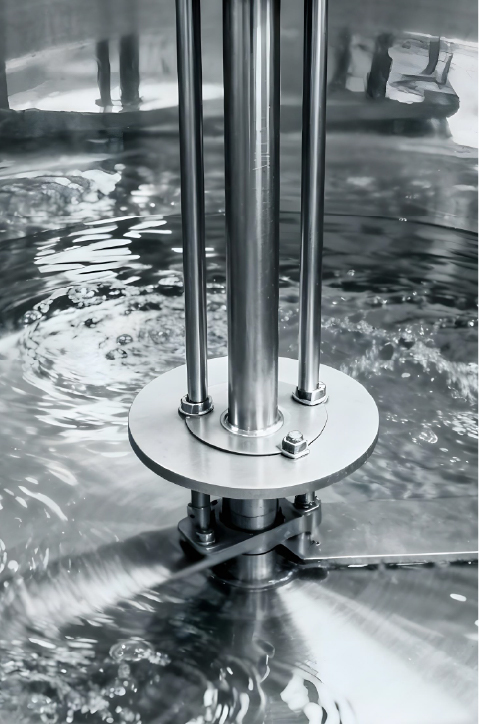
CreWin liquid mixing tanks are designed for efficient mixing, heating, and storage in cosmetic, food, pharmaceutical, and chemical production processes. Built with stable structure and reliable performance, they support consistent blending of liquid materials under different production requirements.

Key Functions

  • Emulsification & Homogenization

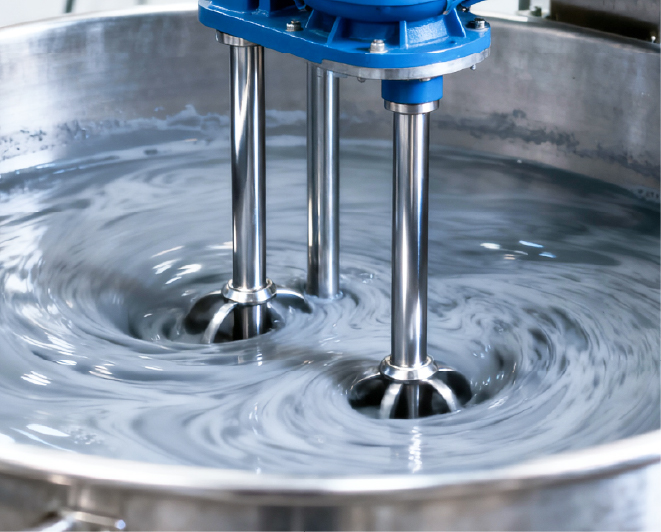
    Uses high shear to create a stable, fine emulsion of immiscible liquids (e.g., oil and water), resulting in a smooth, uniform product.

  • Temperature Control

    Equipped with a jacket for precise heating and cooling of materials.

  • Mixing Efficiency

    Uses mixing system to create a stable, fine emulsion of immiscible liquids (e.g., oil and water), resulting in a smooth, uniform product.

Applications

Common Applications

FAQs

Liquid Mixing Tank FAQs

Understanding the Liquid Mixing Tank
A stainless steel mixing tank is widely used for mixing, blending, and holding liquid or powder materials in industrial production. CYJX provides stainless steel mixing tanks and industrial mixing equipment for different processing needs. The tanks are manufactured with stainless steel materials and can be equipped with different agitator types, heating systems, and speed control options according to the production process. They are suitable for industries such as cosmetics, food, chemical, and pharmaceutical manufacturing.
Open Mixing Tanks
What is the Open Mixing Tank?

An open mixing tank is a stainless steel mixing vessel designed for blending, stirring, heating, and preparing liquid or low-viscosity products. It is commonly used in the cosmetics, pharmaceutical, food, and chemical industries for daily production processes,such as lotions, detergents, syrups, liquid soap,etc.

The tank has an open-top structure, making it convenient for material loading, inspection, and cleanin gand are manufactured with stainless steel materials such as SUS304 or SUS316L according to different production requirements. The tank capacity, agitator type, heating method, and control system can all be customized based on the processing application.

What is Open Mixing Tank Made Of?

An open mixing tank is usually composed of several main parts, including the tank body, mixing system, heating and cooling system, electrical control cabinet, and temperature control components.

The mixing tank body is manufactured from stainless steel with an inner polished surface for easy cleaning and product handling. Depending on the process requirement, the tank can be designed with a single layer too.
The mixing system commonly uses an Frame-type agitator installed from the top of the tank. The agitator rotates slowly to move the materials evenly inside the vessel. Some tanks are also equipped with side scrapers, high-speed dispersers, or bottom homogenizers for additional mixing functions.

Inside the tank, baffles and fixed blades are often fixed to the inner wall. These baffles help change the direction of liquid flow during mixing and improve circulation inside the vessel.

The heating system can use electric heating or steam heating, while the cooling function is usually connected with chilled water circulation. The electrical control panel allows operators to control mixing speed, heating temperature, and running time according to production needs.

How Does Open Mixing Tank Work?

During operation, the agitator rotates inside the tank and drives the material to circulate along the vessel wall. The movement of the liquid creates continuous mixing and improves product uniformity.

As the material flows through the tank, the baffles interrupt the circular motion and force the liquid to change direction. This helps improve the mixing effect and allows the materials to blend more evenly.

If the tank is equipped with a heating system, heat is transferred through the jacket to warm the product during mixing. For cooling applications, chilled water can circulate through the jacket to reduce product temperature.
For some production processes, powder materials and liquid ingredients are added directly into the open tank during mixing. The open-top structure allows operators to monitor the mixing condition and adjust the process more conveniently.

Open mixing tanks are widely used for liquid mixing, dissolving, blending, heating, cooling, and temporary storage in many industrial production lines.
Closed Mixing Tank
What is the Closed Mixing Vessel?

A closed mixing vessel is a stainless steel mixing tank used for blending, heating, cooling, and holding liquid products in a sealed environment. 

Compared with an open mixing tank, the closed structure helps reduce dust, contamination, and material evaporation during production. It is suitable for products such as shampoo, liquid soap, lotion, syrup, and chemical liquids.

What is Closed Mixing Vessel Made Of?

A closed mixing vessel is usually composed of a stainless steel tank body, mixing system, heating and cooling jacket, temperature control system, and electrical control cabinet.

The tank is commonly manufactured from SUS304 or SUS316L stainless steel. An anchor agitator is mounted from the top cover, while baffles are installed inside the tank to improve material circulation during mixing.

The tank can also be equipped with electric heating, steam heating, cooling functions, or additional mixing devices according to production requirements.

How Does Closed Mixing Vessel Work?

During operation, the frame-type  agitator rotates slowly and drives the material to circulate inside the vessel. The baffles help change the liquid flow direction and improve mixing performance.

The agitator creates continuous movement from top to bottom, allowing the materials to blend evenly. When heating is applied through the jacket, the circulating liquid helps transfer heat throughout the tank more uniformly.

Closed mixing vessels are commonly used for liquid mixing, heating, dissolving, and product preparation in industrial production.
What Is the Production Time for a Stainless Steel Mixing Tank?
The manufacturing lead time for a stainless steel mixing tank depends on the tank capacity, structure, and configuration requirements. Standard mixing tanks are usually completed within 2 to 10 weeks after order confirmation. For customized projects with heating, vacuum, or high shear mixing systems, the production time may be longer depending on the technical requirements and manufacturing schedule.
Perfume Mixer with Integrated Chiller

What is Perfume Mixer with Integrated Chiller?

A perfume mixer with integrated chiller is a complete system designed for perfume production in the cosmetic industry. It combines mixing, cooling, and filtration functions in one compact unit. The machine is commonly used for manufacturing perfume, cologne, deodorant, and toilet water.

Compared with perfume mixers using a separate chiller, the integrated design saves installation space and makes operation more convenient. The system is widely used in cosmetic factories for small and medium-scale perfume production.

The machine is usually composed of a stainless steel mixing tank, chiller system, filtration system, diaphragm pump, and electrical control cabinet. Inside the tank, an evaporating coil is connected to the refrigeration system to cool the perfume during circulation. The chilling temperature can normally reach around -15°C, which is suitable for perfume processing and clarification.

The filtration system commonly uses two-stage microporous membrane filters with different filtration accuracy to remove impurities and improve product clarity.

How Does Perfume Mixer Machine Work?

During operation, compressed air enters the air tube installed inside the tank. The air passes through small holes and creates bubbles inside the liquid. The perfume ingredients are mixed by the movement of these bubbles, so no mechanical agitator is required inside the tank.

At the same time, the diaphragm pump circulates the perfume from the bottom outlet through the filtration system and back into the mixing tank. The liquid passes through multiple filters to remove particles and unwanted residue during circulation.

The chiller continuously cools the evaporating coil inside the tank, transferring low temperature to the perfume around it. As the temperature decreases, wax and other impurities separate from the liquid and are removed through filtration.

After several circulation and cooling cycles, the finished perfume is transferred to storage tanks or filling machines for the next production process.

The Quality Control of Liquid Mixers

Liquid mixers are designed in accordance with Current Good Manufacturing Practice (CGMP) regulations, which are widely applied in pharmaceutical, cosmetic, and food manufacturing industries. CGMP guidelines focus on proper design, process control, and monitoring of production systems to ensure consistent manufacturing performance.

Compliance with CGMP standards helps maintain stable product quality by ensuring controlled production procedures and structured operational management. It also supports the implementation of quality management systems that define clear operating procedures for each stage of production.

In addition, CGMP requirements include the management of process variations and product quality monitoring. This allows manufacturers to identify and review deviations during production and maintain consistent output quality.
Through compliance with CGMP standards, vacuum mixing equipment can support reliable and controlled manufacturing processes suitable for regulated industrial applications.

Applications of Emulsifying and Mixing Equipment

Modern emulsifying and mixing systems are widely used across pharmaceutical, food, cosmetic, and chemical industries for processing liquid, semi-solid, and high-viscosity products. These systems are designed to improve mixing consistency, product stability, and production efficiency in various manufacturing environments.

Pharmaceutical Industry: Pharmaceutical processing often requires precise handling of suspensions, syrups, creams, ointments, and sterile formulations. Emulsifying equipment helps achieve uniform particle distribution, stable product consistency, and controlled processing conditions for products such as pharmaceutical syrups, ophthalmic solutions, vaccines, and tablet coating materials.

Food and Beverage Industry: Food manufacturing processes involve blending ingredients with different viscosities while maintaining hygiene and product quality. Emulsifying systems are commonly used for dairy products, sauces, edible oils, flavor emulsions, confectionery products, pet food, and beverage processing applications.

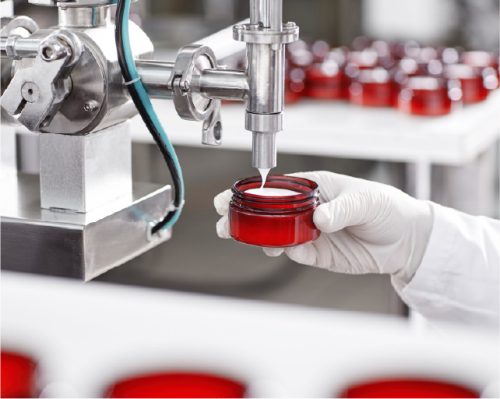
Cosmetics and Personal Care Industry: Cosmetic manufacturing requires stable emulsification, effective powder dispersion, and uniform mixing of oils, fragrances, pigments, and thickening agents. Emulsifying homogenizers are widely used for creams, lotions, shampoos, conditioners, toothpaste, sunscreens, perfumes, and other personal care products.

Chemical Industry: Chemical processing applications often require efficient dispersion and homogenization of solid and liquid materials. Emulsifying equipment is suitable for paints, coatings, lubricants, agrochemicals, pigments, inks, specialty chemicals, and other industrial formulations.

CYJX provides emulsifying and mixing solutions designed to support different processing requirements across multiple industries, with customizable configurations available for various production capacities and product characteristics.

Have other Questions for Us? Ask Our Experts Directly