Vacuum Emulsifier Homogenizer

Products

Vacuum Emulsifier Homogenizer

CreWin's vacuum emulsifier homogenizer machines are used in cosmetics, pharmaceutical, food, and chemical manufacturing for the processing of creams, lotions, ointments, and emulsions. Follow the links below to explore specifications, features, and application details.

introduce

What is Vacuum Emulsifier Homogenizer

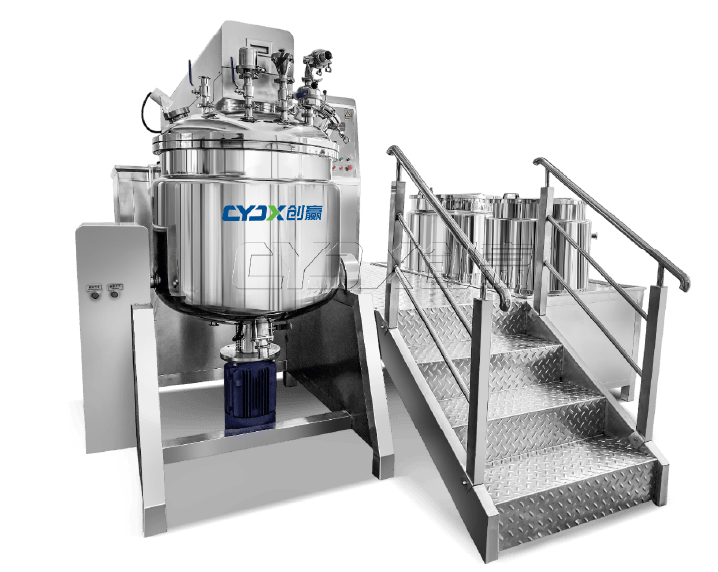
A vacuum emulsifier homogenizer is a machine that creates stable, high-quality emulsions, dispersions, and suspensions through high-shear mixing and vacuum deaeration. It is used in industries like cosmetics, pharmaceuticals, and food to produce products such as creams, lotions, and ointments. The vacuum system removes air to prevent oxidation, improve product texture, and ensure a homogeneous and stable mixture.

Key Functions

  • Emulsification & Homogenization

    Uses high shear to create a stable, fine emulsion of immiscible liquids (e.g., oil and water), resulting in a smooth, uniform product.

  • Vacuum
    De-Aeration

    Operates under negative pressure to effectively remove air and bubbles, preventing oxidation and improving product stability, density, and appearance.

  • Efficient
    Mixing

    Utilizes multi-functional agitators (often including wall scrapers) for uniform mixing of the entire batch and efficient heat transfer.

  • Temperature Control

    Equipped with a jacket for precise heating and cooling of materials.

Applications

Common Applications

FAQs

Vacuum Emulsifier Homogenizer FAQs

What Is a Vacuum Emulsifying Homogenizer?
    A Vacuum Emulsifying Homogenizer is an advanced mixing system designed for the production of emulsions, creams, suspensions, and viscous liquid products. It is widely used in the cosmetic, pharmaceutical, food, and chemical industries for manufacturing products that require stable and uniform texture.

    The machine integrates several processing functions into one complete system, including mixing, homogenizing, dispersing, vacuum deaeration, heating, and cooling. Compared with conventional mixers, the vacuum emulsifying homogenizer provides better control over product consistency and processing conditions.

    One of the key features of this equipment is the vacuum mixing environment. During the mixing process, the vacuum system helps reduce air bubbles inside the material, which improves product appearance, stability, and smoothness. Vacuum processing can also help minimize foam generation and support more efficient blending of ingredients.

    The homogenizing system uses high-speed rotor and stator technology to break down particles into finer sizes and create a more uniform emulsion. This process is especially important for products such as creams, lotions, gels, ointments, sauces, and liquid detergents.
    Vacuum emulsifying homogenizers are available in different configurations to suit various production requirements.

    How a Vacuum Emulsifying Homogenizer Works
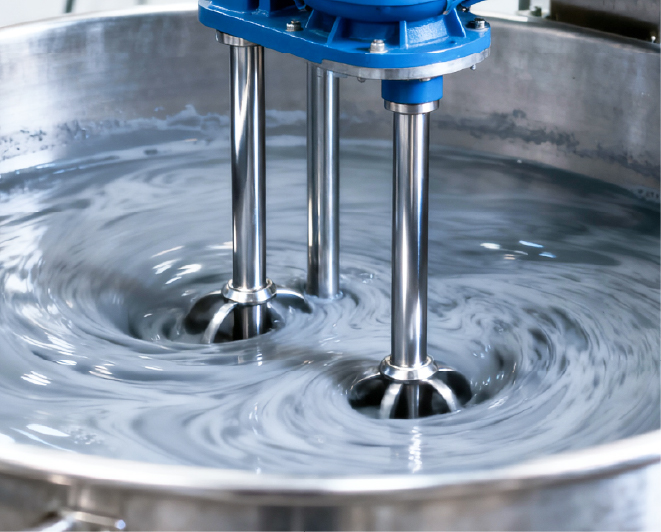
    A Vacuum Emulsifying Homogenizer works by combining mixing, high-shear homogenization, and vacuum processing in a closed system. Raw materials are first fed into the mixing tank, where internal impellers create continuous circulation through forward and reverse rotation, ensuring uniform blending of all ingredients.

    During the process, the material is subjected to mechanical forces and centrifugal movement, which helps improve dispersion and reduce particle size. The homogenizing system with rotor-stator structure further refines the mixture to form a stable emulsion.

    The equipment is also equipped with a heating and cooling jacket to control processing temperature. At the same time, the vacuum system removes air from the tank, reducing bubbles and improving product consistency.

    Through these combined functions, the vacuum emulsifying homogenizer ensures stable and uniform results for cosmetic, pharmaceutical, food, and chemical production.
    Who makes emulsifiers?
    Several manufacturers worldwide produce emulsifying equipment for the cosmetic, pharmaceutical, food, and chemical industries. These machines are used to manufacture creams, lotions, emulsions, and other liquid or semi-solid products with stable and uniform consistency.
    Among these manufacturers, Chinese brands such as CYJX provide vacuum emulsifying homogenizers, mixing tanks, and processing systems designed to improve mixing efficiency, homogenizing performance, and production reliability for different manufacturing applications.
    Applications of Emulsifying and Mixing Equipment
    Modern emulsifying and mixing systems are widely used across pharmaceutical, food, cosmetic, and chemical industries for processing liquid, semi-solid, and high-viscosity products. These systems are designed to improve mixing consistency, product stability, and production efficiency in various manufacturing environments.

    Pharmaceutical Industry

    Pharmaceutical processing often requires precise handling of suspensions, syrups, creams, ointments, and sterile formulations. Emulsifying equipment helps achieve uniform particle distribution, stable product consistency, and controlled processing conditions for products such as pharmaceutical syrups, ophthalmic solutions, vaccines, and tablet coating materials.

    Food and Beverage Industry

    Food manufacturing processes involve blending ingredients with different viscosities while maintaining hygiene and product quality. Emulsifying systems are commonly used for dairy products, sauces, edible oils, flavor emulsions, confectionery products, pet food, and beverage processing applications.

    Cosmetics and Personal Care Industry

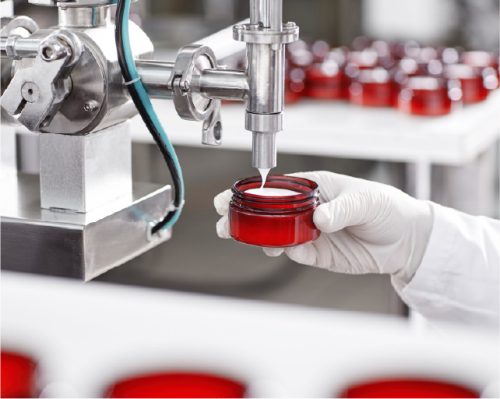
    Cosmetic manufacturing requires stable emulsification, effective powder dispersion, and uniform mixing of oils, fragrances, pigments, and thickening agents. Emulsifying homogenizers are widely used for creams, lotions, shampoos, conditioners, toothpaste, sunscreens, perfumes, and other personal care products.

    Chemical Industry

    Chemical processing applications often require efficient dispersion and homogenization of solid and liquid materials. Emulsifying equipment is suitable for paints, coatings, lubricants, agrochemicals, pigments, inks, specialty chemicals, and other industrial formulations.

    CYJX provides emulsifying and mixing solutions designed to support different processing requirements across multiple industries, with customizable configurations available for various production capacities and product characteristics.
    The Quality Control of Vacuum Mixers
    Vacuum mixers are designed in accordance with Current Good Manufacturing Practice (CGMP) regulations, which are widely applied in pharmaceutical, cosmetic, and food manufacturing industries. CGMP guidelines focus on proper design, process control, and monitoring of production systems to ensure consistent manufacturing performance.

    Compliance with CGMP standards helps maintain stable product quality by ensuring controlled production procedures and structured operational management. It also supports the implementation of quality management systems that define clear operating procedures for each stage of production.

    In addition, CGMP requirements include the management of process variations and product quality monitoring. This allows manufacturers to identify and review deviations during production and maintain consistent output quality.
    Through compliance with CGMP standards, vacuum mixing equipment can support reliable and controlled manufacturing processes suitable for regulated industrial applications.

    Have other Questions for Us? Ask Our Experts Directly